
Spiders and Lions:The Power of Networks to influence change for Women in STEM


This article employs the metaphor of a weaving spider to illustrate how female tech professionals leverage networking to amplify their collective impact. It analyzes the global gender parity practices of INWES, with a specific focus on achievements in Taiwan and the Asia-Pacific. The content explores how women in STEM overcome institutional constraints to foster a more diverse and inclusive ecosystem.
The Landscape
The landscape of Science, Technology, Engineering, and Mathematics (STEM) is continuously evolving, yet the push for true gender parity remains a critical global endeavour. At the forefront of this movement is the understanding that isolated efforts, while valuable, are insignificant in comparison to the collective power of a unified front. This concept—the profound capacity of networks to influence change—is the cornerstone of the International Network of Women Engineers and Scientists (INWES).
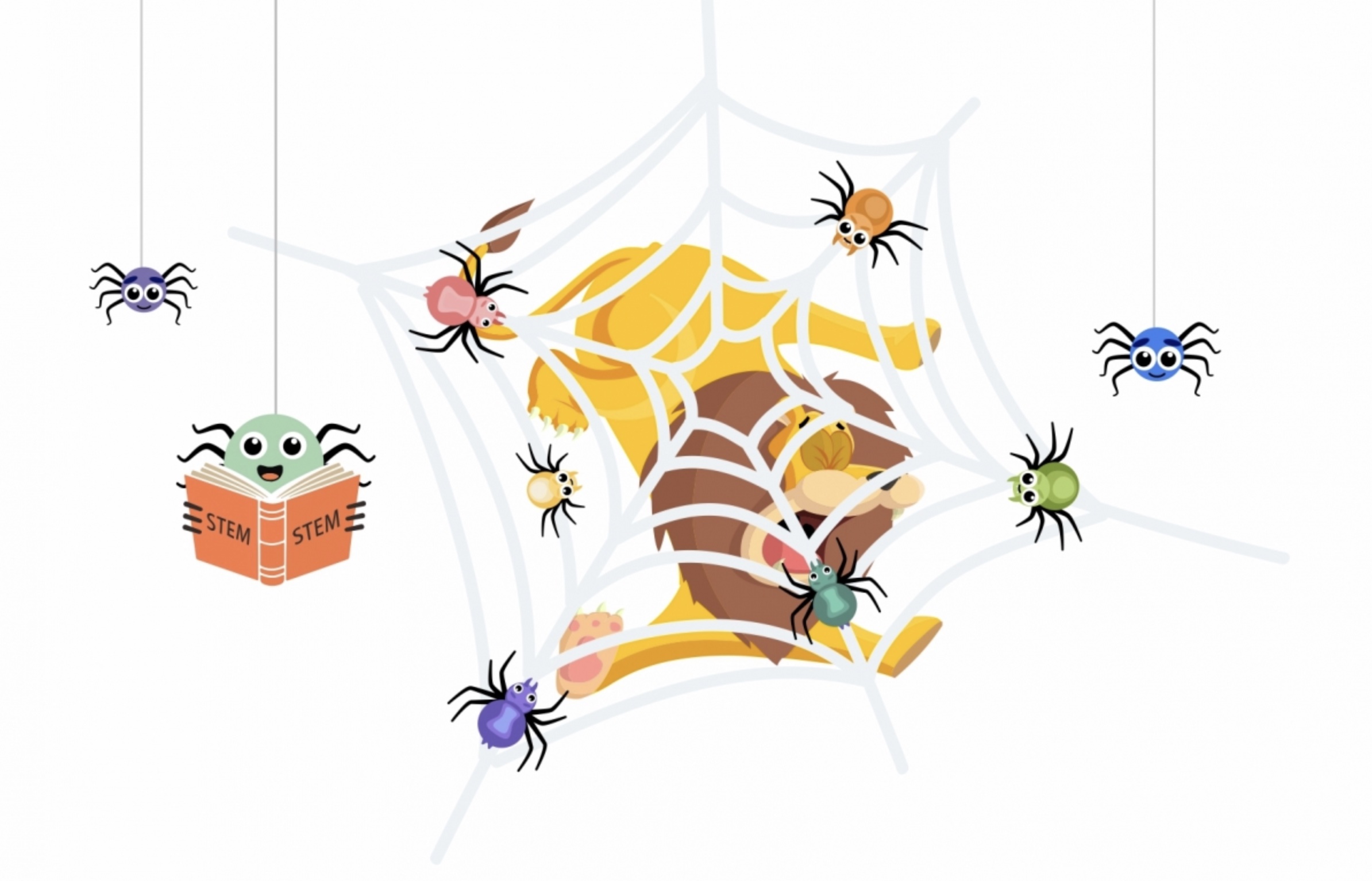
There is an African saying: When spiders unite, they can tie up a lion.
We women in STEM are only small spiders, but we can build webs of influence. Each group of women in STEM may be a single fragile spider’s web, but when enough of these get together, they can be used to subdue the lion of all the social and cultural issues that affect the gender gap in STEM.
The Lion
The lion represents the many and varied reasons for the low numbers of women in engineering and in leadership in science:
- Structural barriers – There are many examples of processes and procedures which stop women from participating in STEM education and in work.
- Beliefs and stereotypes – As human beings, we all are affected by unconscious biases and conscious prejudices that affect how we value and behave to others.
- Choices and mindsets - what people believe about gender and themselves has a big impact on how we value ourselves.
What makes the lion even more powerful is the combination of all the above. The lion is a powerful animal that rules over its community and does not like to be challenged.
Because we often believe women to be the naturally more empathetic and caring gender, women become the primary carers of children and our elders. In most societies, work and study is built around the expectation that men will be working full-time and will not be distracted by other concerns. This means that those women who are also mothers and carers work around those expectations. If employers do not provide good policies around maternal responsibilities, women have no choice but to reduce their ambitions and focus on their caring duties.
What sort of policies do we need to overcome this barrier to women? At the very least flexibility to adapt working/studying days to allow for other timetables, such as school timetables, dealing with social and health services and so on. But we also need change outside work such as schools that allow parents to drop off children at different times.
Even where policies allow the flexibility needed by carers, we still see that these focus on women, that is, instead of policies for parents, we often talk about policies for mothers. For example, corporates often provide generous maternal leave, but frequently fathers are given only a few days; men are not always given the same opportunity to be carers. And so, we re-emphasise the idea that it is women who will be the carers. The solutions are given for the “problem” that is “being a woman”.
Even where being empathetic and caring should be of advantage, for example in leadership roles, or as designers of technical solutions that are useful to others, being a woman can still mean we are disadvantaged. How do we know this? Not necessarily from personal experience, but more from the various studies that show how in recruitment and in assessment of abilities we all, men and women, downplay the value of potential leadership qualities displayed by a woman while conversely, we will over value the same qualities in a man.
Our beliefs about gender, however, are fundamental. So are women truly more empathetic and caring than men? Or are we nurtured to be this way? Either way, the result is that when women are more involved in STEM, we know this leads to better science and engineering.
We may still be questioning whether our gendered behaviours are nature or nurture, but we can challenge the belief that women are very different to men intellectually, and this belief has a huge negative impact on girls at the start of their journey in STEM. The idea that men and women have different areas of thinking skills is challenged by Gina Rippon and Cordelia Fine. These two scientists provide ample evidence that much of what we often take to be self-evident truths, such as men are better at spatial reasoning and so better mathematicians and logical thinkers, or that women are more verbal and better at communication, are based on flawed science.
As scientists at heart, we all should be joining together to challenge and overcome the lion of assumptions and misinformation.
A Global Web of Spiders
INWES is not just an organization; it is a global ecosystem. It serves as an umbrella network connecting organizations of women in STEM, universities, institutions, and individual members who aspire to create new advocacy groups. The scale of INWES is a testament to the power of collective networking: INWES represents approximately 200,000 women from across over 50 countries worldwide.
The roots of INWES run deep, and illustrates our decades-long commitment to connecting women across borders:
- 1964: The foundation was laid with the Continuing Committee for the International Conferences for Women Engineers and Scientists (ICWES), our triennial flagship global event.
- 1999: A pivotal moment occurred at the World Conference on Science (WCS) where the ‘Science Agenda - Framework for Action’ was adopted, with Article 90 explicitly identifying that "special efforts should be made… to establish an international network of women scientists."
- 2002: INWES was officially established at ICWES12, notably with the crucial support of UNESCO.
INWES continues to seek to work closely with the United Nations: we are official NGO partners to UNESCO; we take part in Commission for the Status of Women events, in particular the NGO-Forums; we have observer status with UNFCCC and we are seeking to strengthen the link to ECOSOC. INWES has taken part in several recent COP events and in the NGO-Forum events, many times jointly with other organisations, such as other global gender groups or STEM organisations to seek to strengthen links even further.
In addition, we seek to more formal collaborations for projects and programmes. Partners in recent activities include the WFEO (World Federation of Engineering Organisations), FMTS-WFSW (World Federation of Scientific Workers), Mothers in Science, and many other regional organisations and partnerships. These collaborations have led to multiple outputs which we believe increase the visibility of the issues of gender and STEM and add to the body of work seeking to understand how to solve these problems. Some recent examples include
- INWES continues to regularly act as a media partner to the annual Falling Wall Labs in Mongolia events, hosted by German-Mongolian Institute for Resources and Technology (GMIT) in amongst other regional partners. This provides INWES members with the opportunity to take part in this international celebration of STEM.
- In 2022 there were a series of webinars in collaboration with INWES member Warwick University, to consolidate experiences, mindsets, attitudes and insights that feed into “Reimagining a STEM Research Culture" to enhance participation by women in STEM research and innovation.
- International surveys running through 2021-22 on the Perceptions of Gender barriers In Science and Engineering (GISE) in collaboration with KWSE in Korea resulted in full research reports and the GISE gender index in STEM that has been applied in other studies.
- More recently, the Herstories project to gather stories of women in STEM at all levels of careers from all over the world has been gathering pace. A toolkit developed by University of Leeds in the UK is being adopted by many members, and TWiST in Taiwan is supporting projects to use AI to increase engagement, and cartoons to make these stories more accessible.
- We are currently submitting joint bids to the Horizon Programme in the EU and other funding programmes for actions and studies on women’s careers, and on hearing the voices of scientists and engineers.
Another strength of INWES lies in its decentralized but deeply connected regional networks. By organizing locally but collaborating globally, the network ensures that the specific cultural and regional challenges faced by women in STEM are addressed, while still benefiting from international solidarity. Our regional networks include:
- INWES-Europe: Spanning across Cyprus, France, Germany, Portugal, Spain, Switzerland, Norway, and the UK.
- ARN (African Regional Network): A powerful coalition of sub-Saharan members representing Burkina Faso, Cameroon, Ghana, Kenya, Namibia, Nigeria, Senegal, Tanzania, Uganda, Congo, Rwanda, Cote d’Ivoire.
- APNN (Asia and Pacific Nation Network): A massive and active web of members from Australia, Bangladesh, India, Japan, South Korea, Malaysia, Mongolia, Myanmar, Nepal, New Zealand, Pakistan, the Philippines, Sri Lanka, Taiwan, and Vietnam.
- MENA (Middle East & North Africa): Including Tunisia, the UAE, and Morocco.
We also have member across the Americas: Including Canada, the USA, Mexico, and Bolivia; and we are in the process of setting up a new Regional Network in Latin America.
INWES has moved beyond simple advocacy to building a global infrastructure that supports women at every stage of their STEM careers. We support individuals in setting up women in STEM groups; students to link to others and network through our events; women in industry and academia to share experiences and opportunities; and we raise the visibility of leaders in STEM.
Through all the above activities, INWES plays a structural, enabling, and capacity‑building role, helping new or informal women‑in‑STEM communities to formalise, connect, and grow.
Weaving Your Own Web
Our overarching message is that networking is not a passive activity—it is a strategic tool for systemic change. Establishing and participating in these networks is not just for individual career advancement; it is for the benefit of all women in STEM groups.
You may not fully identify with the spider, meticulously weaving connections across disciplines and borders, or believe in your power to overcome the lion; but we hope you find strength in being part of a global group of people who want to see a better world, one where everyone, all women, have the opportunity to take part in all areas of science and engineering.
INWES actively encourages both individuals and groups to get involved. For individuals, the network provides the resources and support needed to create local advocacy groups from the ground up. For existing groups, INWES offers a platform to collaborate with other organizations on a global scale.
We call on INWES members and all to connect with us. Look at the INWES website, our newsletters, our social media channels on LinkedIn and Facebook for calls to join in our activities, for volunteers to support INWES activities. We want to share your news and projects, and furthermore we want to increase your voice at INWES so do consider putting yourself forward to INWES committees. Companies and corporates, and potential global partners: connect with us and let’s share projects and opportunities.
Our next International Conference of Women Scientists and Engineers, ICWES20, in the Philippines, and hosted by PTC-WEN in August 2026, seeks sponsors and supporters to enable more women and allies from across the world to help us make this a better place. Make sure ICWES20 is in your diary! Our next APNN Annual Conference, hosted by TWiST at National Sun Yat-sen University in Kaohsiung, Taiwan, from November 3rd to 5th, is also essential for members and supporters in Asia and nearby regions.
To change the landscape of STEM, we must utilize the power of connection. By joining networks like INWES, women in engineering and science can amplify their voices, share vital resources, and influence policy on an international level. The web has been woven, and the number of spiders is growing—the only step left is to join and weave.
Dr Sarah Peers
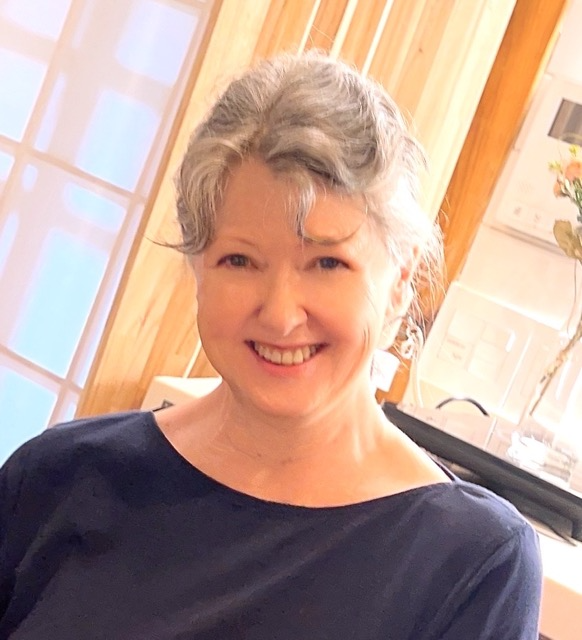
Dr. Sarah Peers is INWES President 2024-2026, having also served as Deputy President 2017-2020, and worked as project manager for the INWES International Surveys on Perceptions of Gender barriers In Science and Engineering project (GISE). She is currently Head of Academic Skills and Lead for Mathematics Education for Engineering at NMITE (New Model Institute for Technology and Engineering) in the United Kingdom, which is a new higher education institute challenging the norms in engineering education.
Her academic foundation is as robust as her advocacy. She is a Fellow of the UK’s Institute of Mathematical Applications and the Institute of Innovation and Knowledge Exchange. With a background in mathematics and maths education (BSc, MSc, PGCE), and a PhD on reliability and AI-based decision-making for the inspection and repair of offshore structures, Sarah bridges the gap between high-level technical expertise and grassroots educational reform.
Sarah has dedicated her career to widening participation in STEM and has been a very active member of INWES since 2017. Since 1992, she has been an activist for gender equality in STEM, leveraging her experience to champion the next generation of female engineers and scientists.


