
積極鼓勵科技女性的專業發展—他山之石


積極鼓勵科技女性的專業發展—他山之石
吳嘉麗
淡江大學化學系
■ 歐盟科技性別平等綱領
歐盟多年來結合各國專業人士投入並推動性別平等政策,特別強調歐盟各國已漸從「女人的問題」(fixing the women)走向「制度的問題」(fixing the system)。2009年他們出了一本網頁手冊PRAGES(Cacace, 2009, Guidelines for Gender Equality Programmes in Science),參考歐洲、北美及澳洲各國超過1100個系所機構等單位代表所提供的資訊,收集了約125個各種推動的計畫,寫成這本長達數百頁的科技性平推動綱領放在網路供大家參考。個人覺得台灣過去這些年在性別主流化政策的推動下,『性別平等』在科技政策層面顯然也動了起來,而歐盟所提出的三大策略、31項建議、及眾多行動方案也恰可作為我們的參考。限於篇幅及頁面,下面僅就策略和建議部分摘譯如下,全文可上網下載(http://www.retepariopportunita.it/prages/)。
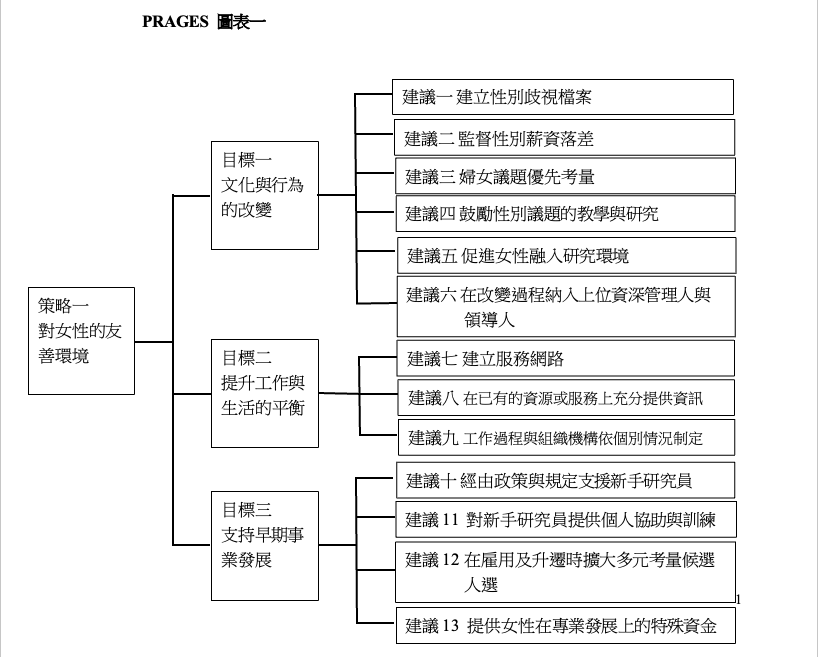
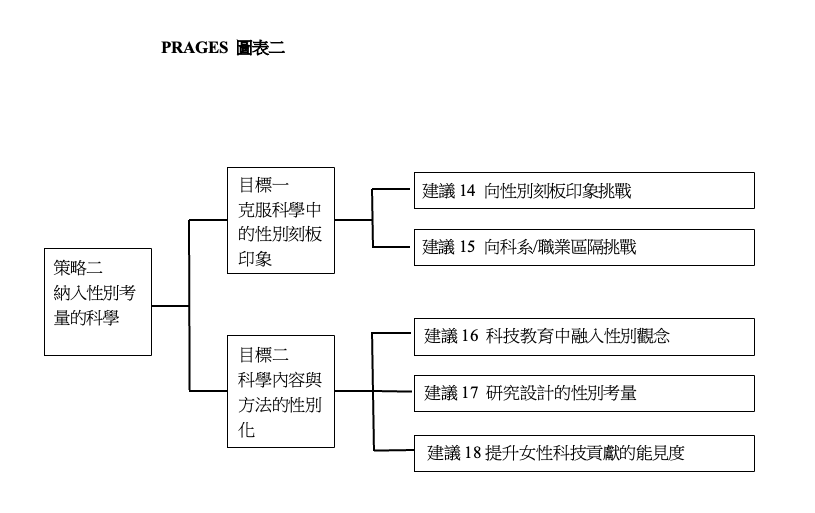
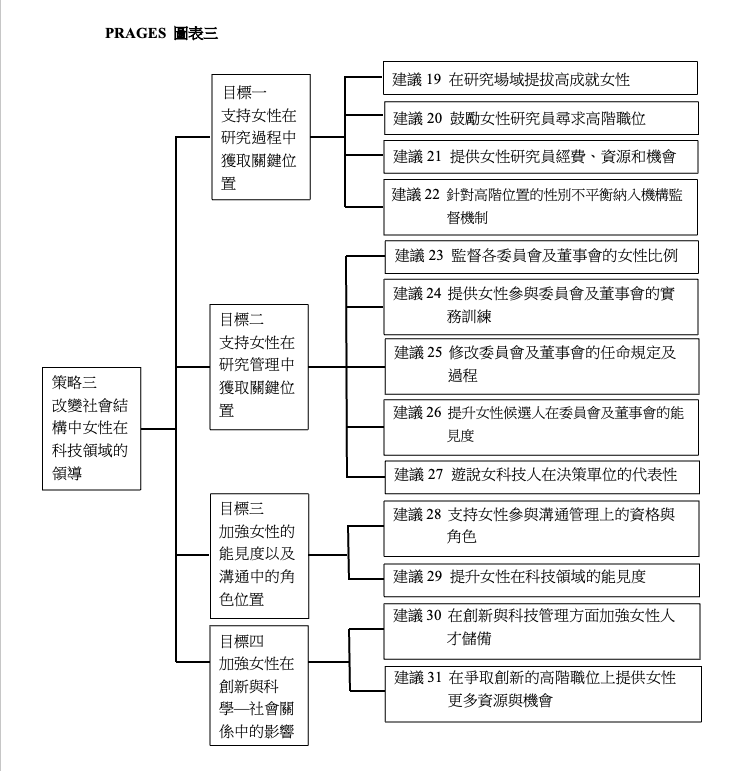
2009年澳洲科學與技術學會報告中亦簡介了幾個其他國家致力於提升女性在科技學術界參與所推動的行動方案,選錄幾則以為借鏡。
■ ADVANCE:Increasing the Participation and Advancement of Women in Academic Science and Engineering Careers
美國國家科學基金會NSF於2001年推動此ADVANCE計劃,以取代1997年開始執行的POWRE計畫,ADVANCE計畫主要針對改善學院機構的性別友善環境、女性教職的聘用與升等、以及支持下列三類計畫:
一、系所改造(IT Institutional Transformation)—獎勵高等教育學院支持系所單位改進性別環境的各項措施。
二、系所改造催化劑(IT Catalyst)—獎勵系所改造前的必要評估措施,諸如資料蒐集彙整、目前聘用、升等相關政策步驟的檢討等等。
三、夥伴計畫(PAID Partnerships for Adaption, Implementation, and Dissemination)—此項獎勵針對高等教育學院、專業學會、以及其他非營利的科技相關團體。此類計畫乃一系所改造的經驗分享,提供在學術生涯性別平等的資訊與訓練。
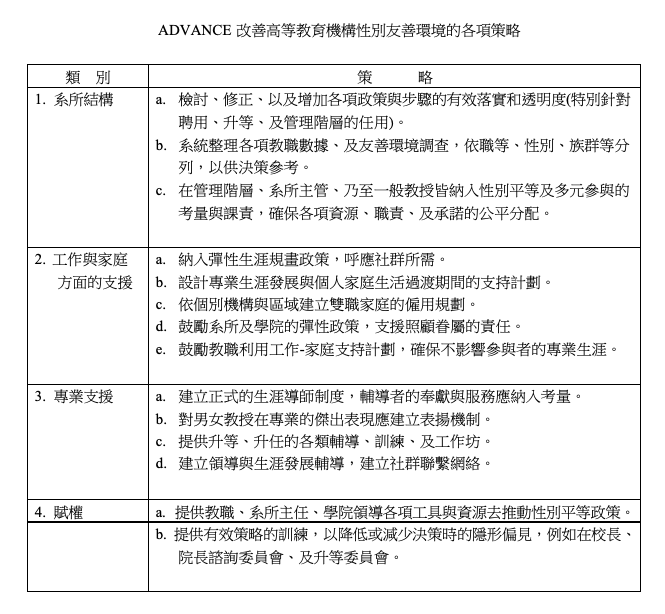
美國國家科學基金會在2009年的報告指出這些計劃的執行,不僅改進了該系所機關對女性的友善環境,對少數族群而言亦然,甚至男性亦同樣受益,尤其在工作與家庭生活的平衡方面,以致學校教授們對工作更為滿意,較少離職,系所則更具競爭力。
■ Athena Project
英國於1999-2007年推動此雅典娜計畫,以期增加在高等教育機構的女性科學家人數。自2003-06年期間有三項調查在高等教育研究機構的男女科學家生涯經驗,數據顯示影響女性研究人員留職的三大關鍵因素為:研究機構文化、社群網絡(networking)、以及托兒設施。因此雅典娜計畫積極針對上述三項提供實施綱領,諸如建立個人及專業支援(導師制度、社群網絡聯繫、及專業發展),任用願意支援的系所領導,建立系所支持工作-家庭平衡的文化。
在雅典娜計畫之下,為了鼓勵女性在科技教育及研究機構任職,2005年發展出另一SWAN計畫(Scientific Women’s Academic Network),目前Athena SWAN計畫仍在持續推動(http://www.athenaswan.org.uk)。
■ Tham 教授職缺
瑞典平等機會法案規定:雇主應積極雇用員工中弱勢性別的人選,逐漸改善性別不衡平的現象。有鑒於此,Tham教授職缺就是專門為增加女性教授名額而設計。雖然可能因此而排除了某些更有能力的男性的機會,女性在科技界的能力也可能更受質疑,不過,不可否認,這也可能是增加女性在科技領域教職最透明的一種作法,其實學術界的謀職本來就難以認定什麼是公平的競爭。
■ 澳洲科技大學婦女執行發展計畫(ATN WEXDEV—Australian Technology Universities Women’s Executive Development)
此項計畫乃由學術界資深女性教職員設計,專為資深女性提升專業發展的知能與技巧以進入管理階層;支持機構邁向多元文化價值;鼓勵提高女性在高階位置的人數;提供各項跨學院活動以加強科技大學資深女性之間的合作與聯繫;加強國際與國內各機構間的策略聯盟。簡言之,此計劃為女性提供個人專業發展的機會,增加女性在高階位置的人數,同時建立女科技社群之間的連絡網路。
參考資料
Bell, S. 2009. “Women in Science in Australia: Maximizing Productivity, Diversity and Innovation”. Pp 45-48, Report prepared for FASTS, Federation of Australian Scientific and Technological Societies.(http://www.fasts.org/images/news2009/fasts%20women%20in%20science%5B1%5D.pdf)
Bystydzienski, J. M. and S. R. Bird, Eds. 2006. “Removing barriers: women in academic science, technology, engineering, and mathematics”. Bloomington: Indiana University Press.
Cacace, M.-ASDO 2009. “PRAGES:Guidelines for Gender Equality Programmes in Science”, project funded by the European Commission and the Italian Ministry for Economy and Finance.(http://www.retepariopportunita.it/prages/)
ETAN Expert Working Group on women and science. 2000. “Science Policies in the European Union: Promoting excellence through mainstreaming gender equality”. Luxembourg: European Commission.(http://www.cordis.lu/rtd2002/science-society/women.htm)
Goulden, M., K. Frasch, and M. A. Mason. 2009. "Staying Competitive: Patching America’s Leaky Pipeline in the Sciences”, The University of California, Berkeley: Berkeley Center on Health, Economic, & Family Security and The Center for American Progress.".(http://www.americanprogress.org/issues/2009/11/pdf/women_and_sciences.pdf)
Hill, C., C. Corbett, and A. St. Rose, Ed.D. 2010. “Why So Few? Women in Science, Technolgy, Engineering, and Mathematics”, Washington, DC: AAUW.(http://www.aauw.org/research/whysofew.cfm/)
National Research Council. 2006. “Beyond Bias and Barriers: Fulfilling the Potential of Women in Academic Science and Engineering”. Washington, DC: National Academies Press.(http://epfl-wishfoundation.epfl.ch/webdav/site/wish/users/119944/public/2006-NAP_ES_3.pdf for free Executive Summary)
Phipps, A, 2008. “Women in Science, Engineering and Technology: three decades of UK initiatives”, Trent:Trentham Books.
The NESSE networks of experts. 2009. “Gender and education (and employment), Gendered imperatives and their implications for women and men, lessons from research for policy makers”. An independent report submitted to the European Commission, European Commission.(http://www.nesse.fr/nesse/activities/reports/activities/reports/gender-report-pdf)


